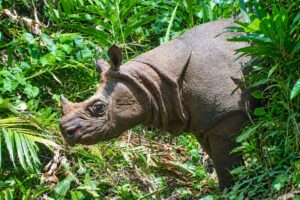
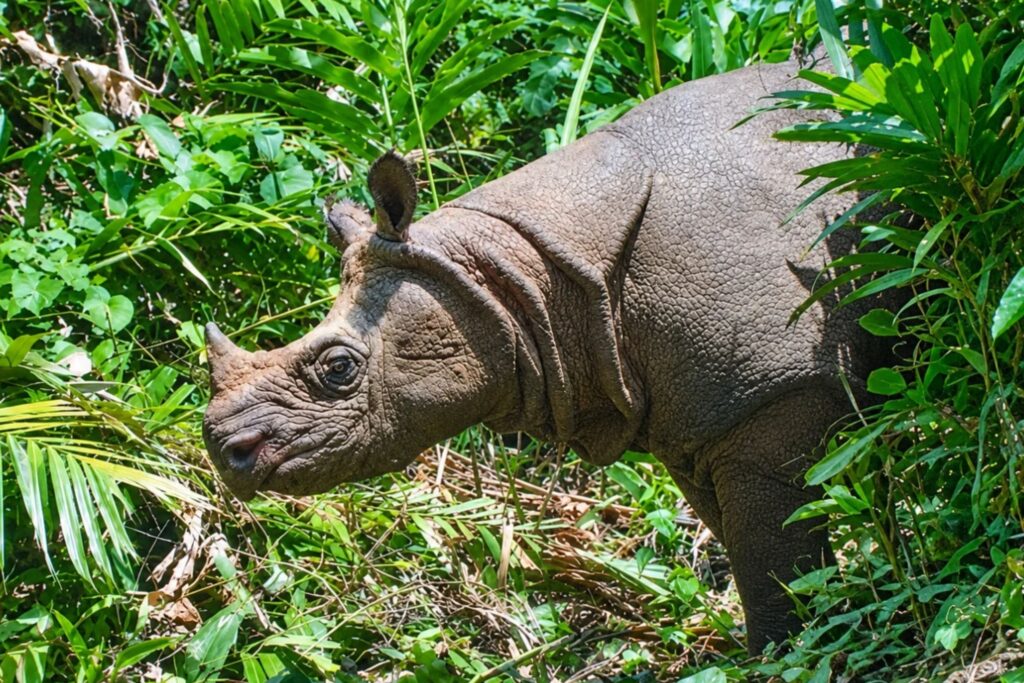
Jakarta, November 17, 2026 — The Indonesian government on Tuesday said it wouldl not proceed with plans to establish a second habitat for the critically endangered Javan rhinoceros until a comprehensive scientific study confirms that the proposed site can adequately support the species’ conservation.
The proposal involves relocating several Javan rhinos from Ujung Kulon National Park in Banten, on the western tip of Java, to Alas Purwo National Park in East Java. The move is intended to reduce the species’ risk of extinction from major natural disasters, including a tsunami triggered by an eruption of Mount Krakatau in the nearby Sunda Strait.
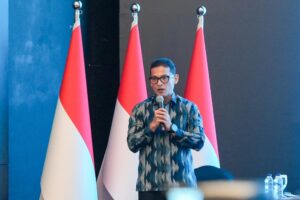
Government Communications Agency (GCA) senior adviser Muhamad Hidayat said the government was still considering Alas Purwo as a potential second habitat for the species.
Hidayat said that further studies were needed to assess the site’s water quality, available roaming area, food supply and safety. The study, he added, should also assess potential conflicts with local communities and competition for resources with other species in Alas Purwo, including the Javan banteng.
He said a comprehensive assessment would help ensure that the government did not make hasty decisions that could threaten the species’ survival.
“The government always prioritizes the safety of each Javan rhinoceros. Therefore, there would be no relocation until a comprehensive scientific study confirms that the food supply and habitat security [in Alas Purwo] can support conservation,” he said.
“These factors need to be fully assessed, based on recommendations from experts,” Hidayat added.
Hidayat stressed that the government would continue to prioritize the protection of Javan rhinos in Ujung Kulon while the comprehensive study was underway.
He also said the relocation proposal was not new, noting that the government had explored the possibility of establishing a second habitat for the species in the 1980s. Gunung Honje in Banten and Cikepuh in West Java were among several locations considered at the time.
Establishing a second habitat is considered important because the Javan rhino population, estimated at around 100 individuals, is concentrated in Ujung Kulon, leaving the species vulnerable to natural disasters affecting the area. Another concern is its low genetic diversity due to inbreeding, which has reportedly reached 58.5 percent, Hidayat said.
“Ujung Kulon remains the primary home of the Javan rhino and must continue to be protected. Alas Purwo can only be considered a second habitat if all ecological and safety requirements are proven through scientific studies. Without that, the relocation will not be carried out,” Hidayat said.
Forestry Ministry spokesperson Ristianto Pribadi said the government had not formally selected Alas Purwo as the species’ second habitat, adding that the proposal was still under consideration and a detailed plan had yet to be completed.
However, he said the proposal had prompted the government to conduct a science-based, measurable and comprehensive assessment of the possibility of establishing a second habitat for the Javan rhino.
“The long-term goal of developing a second habitat is to establish an additional population that is healthy, capable of reproducing, maintains natural behaviors and survives sustainably,” he said.
“These efforts must go hand in hand with strengthening population and habitat protection in Ujung Kulon, so that both mutually support the preservation of the Javan rhino in Indonesia,” Ristianto said.