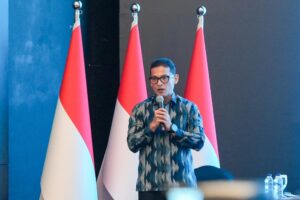
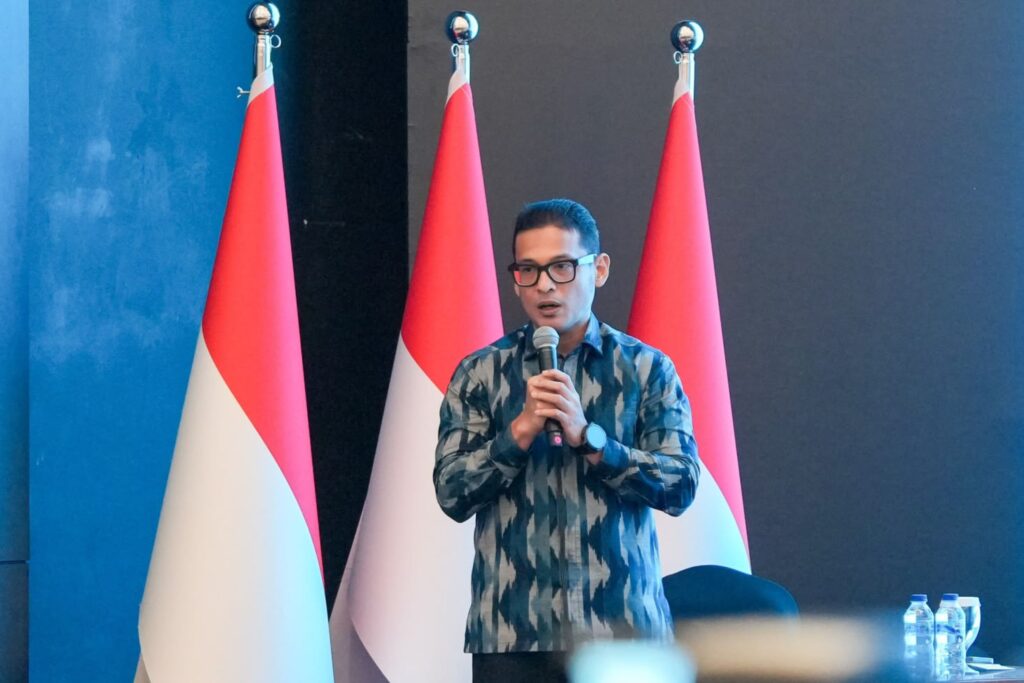
Jakarta, November 18, 2026 — The Indonesian government said on Wednesday that President Prabowo Subianto’s participation in the 33rd APEC Economic Leaders’ Meeting in Shenzhen, China, was aimed at safeguarding national economic interests, particularly those of micro, small and medium enterprises (MSMEs) and grassroots businesses.
Acting Deputy I of the Government Communications Agency (GCA) Fithra Faisal Hastiadi said Indonesia would use the Asia-Pacific forum to expand market access, facilitate smoother trade and create new economic opportunities for local businesses and younger generations.
He said APEC was an important platform for advancing these objectives, as its member economies were among Indonesia’s key trading partners. Nine of Indonesia’s 10 largest trading partners are APEC members, whose combined economies account for nearly 60 percent of global gross domestic product (GDP).
“So far, around 70 percent of our exports have been shipped to APEC economies. This means that when Indonesia actively pushes for more open, fair and seamless trade at the forum, it is also promoting opportunities for local small businesses to expand into global markets,” Fithra said in a statement.
Through the forum, he said, Indonesia would seek to advance the interests of various domestic sectors, including food and energy, agriculture, fisheries, industry and MSMEs. The government wanted to ensure that domestic products could compete globally on a level playing field, particularly in major economies such as the United States and China, without facing unilateral trade barriers.
Improved trade connectivity would also give Indonesia better access to international markets for products beyond traditional commodities, including processed food, fashion items, handicrafts and other creative goods from various regions, helping to increase the country’s export value, he said.
According to Statistics Indonesia (BPS), the country recorded total exports of USD 282.91 billion in 2025, up 6.15 percent from the previous year.
“But the impact of broader market access and reduced trade barriers goes beyond export values,” he said.
“There are farmers whose products find markets, fishermen who gain better market access, MSMEs that can expand their businesses and domestic industries that have more room to grow,” Fithra added.
Cooperation with APEC members could also create opportunities to expand digital trade and cross-border payments, including through the wider adoption of Indonesia’s QR payment system, QRIS. This could make it easier for young entrepreneurs and local businesses to market their products across the Asia-Pacific region, Fithra said.
Beyond its economic benefits, APEC could also provide opportunities for younger generations to learn, develop their skills and build careers in digital industries, amid the expansion of the digital economy and growing demand for digital talent across the Asia-Pacific region.
Fithra said Indonesia also had strategic interests in technological development, particularly in digital infrastructure and governance frameworks for the use of artificial intelligence (AI).
“We must push for AI to become a tool that augments human capabilities, improves public services and opens up room for creativity. Indonesia needs to have a seat at the rulemaking table so that future AI development remains inclusive and benefits the wider public,” Fithra said.
For Indonesia, the 33rd APEC Summit is more than just a gathering of regional leaders. It is part of broader efforts to strengthen the country’s economic position while creating more opportunities for its people to access global markets.